
Policy Breakdown
Social Security
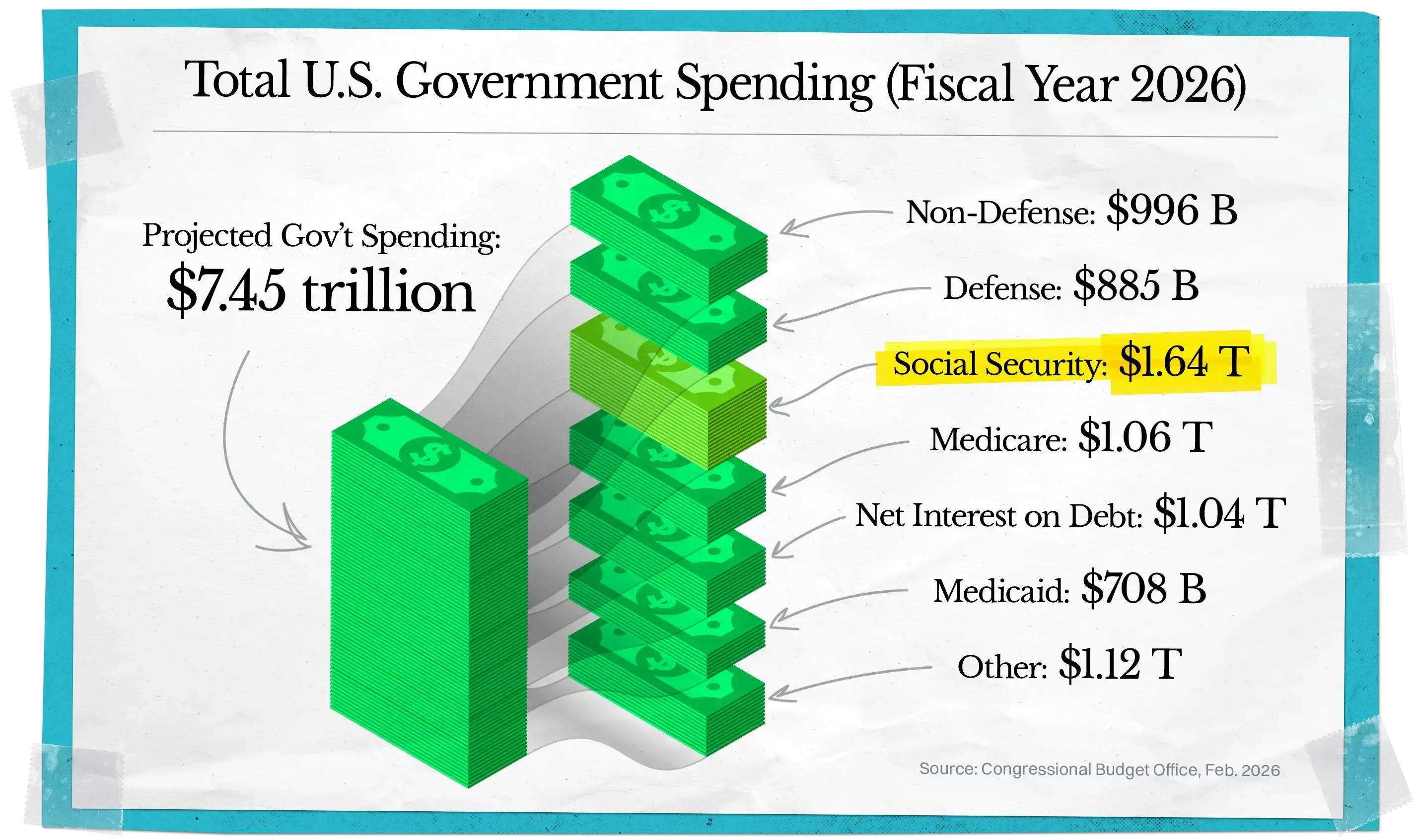
More than 71 million Americans rely on Social Security for retirement income, survivors benefits, and disability insurance payments. The program is the single-largest expenditure in the federal budget, making up more than 20% of it. Learn more about how the program works, its funding challenges, and some ways to address them.
What Is Social Security?
In 1935, President Franklin Delano Roosevelt signed the Social Security Act.
Enacted in the midst of the Great Depression, the law aimed to protect Americans who could no longer work and prevent the elderly from falling into poverty. It established a new federal agency and charged that agency with administering a new social insurance program.
In essence, it established a new federal agency to administer “old-age insurance,” and it was designed to work like this:
Over the course of their working years, Americans would send a portion of their earnings to a federal “trust fund.” Then, in retirement at the age of 65, that trust fund would pay them a benefit, ensuring retirees would have some level of continued income later in life.
Origins
Initially, participation in the Social Security program was limited to workers in commerce and industry (roughly half of the American workforce), which generally did not offer retirement programs.
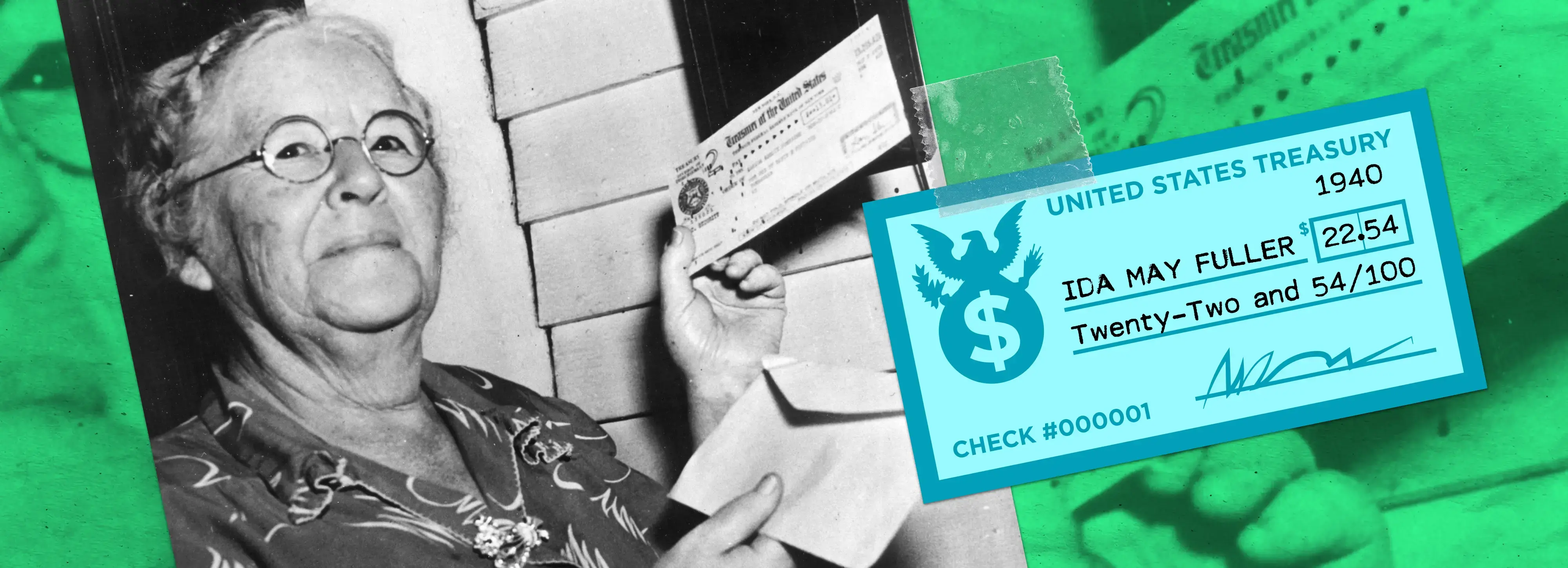
In 1940, Social Security began sending out monthly benefit checks. The first recipient was Ida May Fuller of Ludlow, Vermont. A former schoolteacher and legal secretary, Ida received a benefit check in the amount of $22.54.
EXPANSION
Social Security has delivered checks to millions of Americans like Ida in the decades that followed. The program has also gone through some important changes and expansions.
In fact, amendments to the program were first made in 1939 before Ida received her first check authorizing payments to the families of prematurely deceased workers, as well as the widows, widowers, and/or the minor children of deceased retirees.
Then, in 1956, President Dwight D. Eisenhower expanded the program to cover self-employed Americans, farm workers, and domestic workers.
Eisenhower’s expansion also created the Early Eligibility Age (EEA), allowing female workers to begin claiming Social Security as early as age 62 in return for a permanent reduction in their benefits (Male workers became eligible for the EEA later, in 1983).
The Eisenhower administration also expanded coverage to disabled workers over 50 years old, and later, to all disabled workers and their dependents. This added a new benefit to the program: Disability Insurance.
Finally, Social Security gradually expanded to include federal, state, and local government employees, with federal civilian employees being the last group to be added in 1984.

RETIREMENT AGE
The massive expansion in the number of Americans who were eligible for Social Security eventually put substantial financial strain on the system.
So, in 1983, Congress and President Ronald Reagan made some modest changes to the program in order to secure its financial future. One of the most significant was a change in the age of eligibility, or the retirement age.
Since the program’s inception, American workers had been able to receive their full benefits once they turned 65 years old.
However, the changes enacted in the 1980s raised the retirement age to 66 for Baby Boomers … and 67 for Americans born in or after 1960.

BY THE NUMBERS
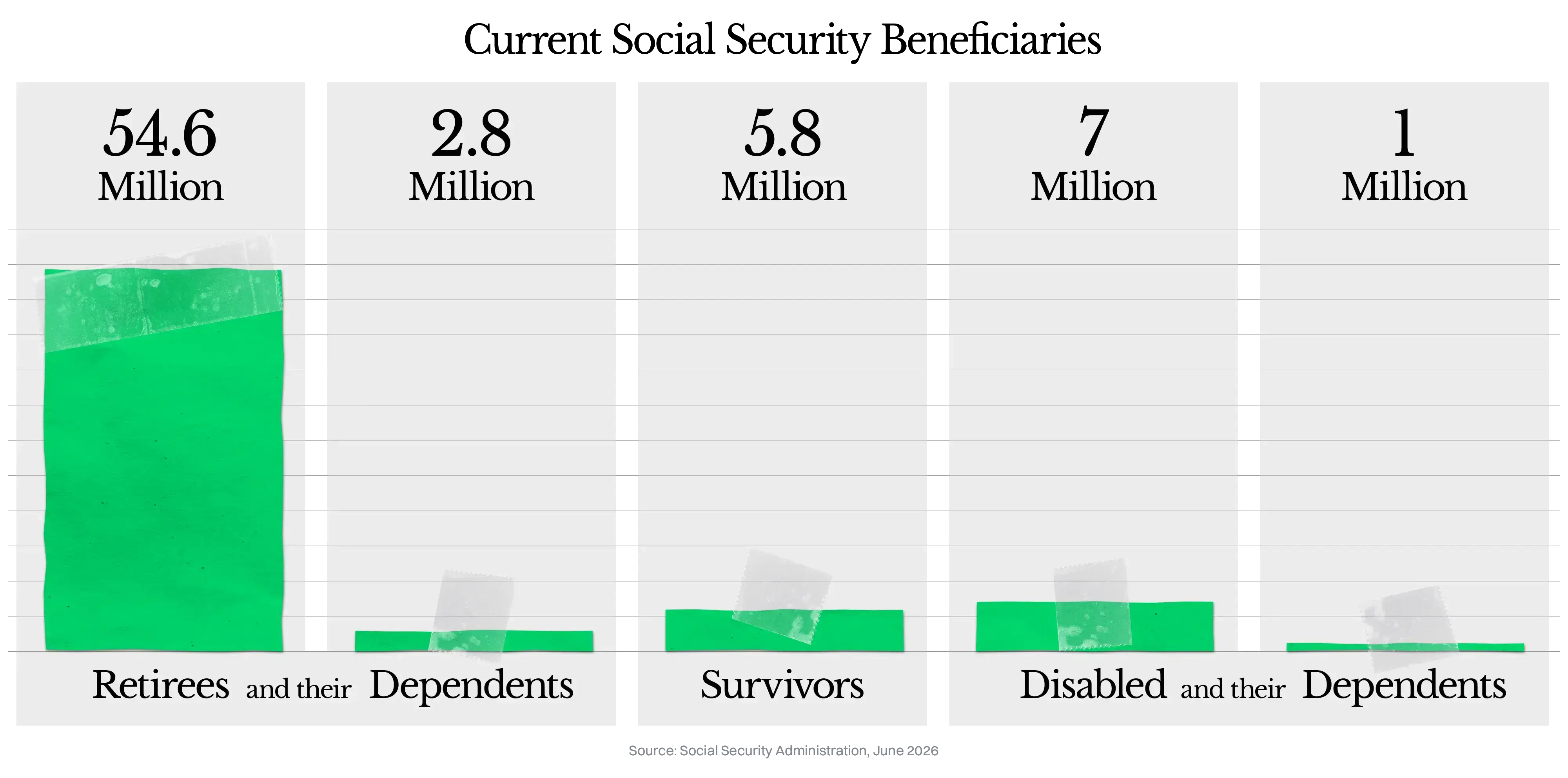
Today, the Social Security Administration estimates that over 71 million Americans receive a Social Security check each month.
In 2026, we’ll spend $1.64 trillion dollars on Social Security benefits.
But where do we get the money for Social Security?
How do you qualify for the program?
And how much money can someone expect as a beneficiary?
